
top of page
  • Facebook
  • Youtube
  • Google
  • Whatsapp
  • Airbnb
  • Instagram
Asana Tribe Yoga Spain Lotus Flower

ASANA TRIBE YOGA BLOG

Learn more about yoga, wellness, and healing


Balance is about so much more than standing on one leg.It’s about trust, awareness, strength, and the quiet confidence that comes from feeling steady in your own body.


At Asana Tribe Yoga, we see balance as a conversation between body, mind, and nervous system — especially for women in midlife, those recovering from injury, or anyone feeling a little ungrounded in today’s fast-moving world.


The beautiful thing? Balance can be trained at any age and any stage of your yoga journey.


Let’s explore why balance matters, and share practical, accessible exercises you can start using today.


Why Balance Is So Important (On and Off the Mat)


Good balance helps to:

  • Prevent falls and injuries

  • Strengthen stabilising muscles in the feet, ankles, hips, and core

  • Improve posture and joint health

  • Build body awareness and coordination

  • Support emotional steadiness and mental focus


As we age, after injury, or during hormonal changes such as menopause, balance can feel more challenging — not because we’re failing, but because the body is asking for more mindful support.


The Hidden Secret to Better Balance


Balance isn’t just about muscle strength.It relies on three key systems working together:

  1. Proprioception – your body’s ability to sense where it is in space

  2. Core and hip stability – deep muscles that hold you upright

  3. Nervous system regulation – staying calm instead of tensing or panicking


When we slow down, breathe, and move with awareness, balance naturally improves.


Practical Yoga Exercises to Improve Balance


These gentle yet effective exercises can be practised at home or integrated into your yoga routine.


1. Foot Awakening & Grounding (2–3 minutes)

Balance starts at the feet.


Try this:

  • Stand barefoot

  • Slowly shift your weight forward, back, and side to side

  • Spread your toes wide and press evenly into all four corners of each foot

  • Imagine roots growing down into the earth

This improves foot strength and proprioception — essential for stability.


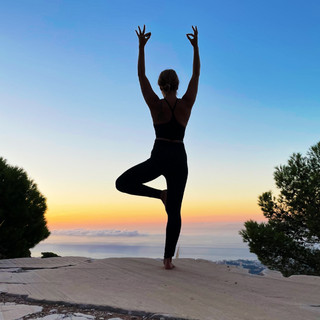
2. Tree Pose (Vrksasana) – With Support

Tree Pose is a classic balance posture, but it doesn’t need to be rigid.


How to practise:

  • Stand near a wall or chair

  • Place one foot against the ankle or calf (avoid the knee)

  • Keep a soft bend in the standing leg

  • Hands can rest at the heart or lightly touch the wall


🧘‍♀️ Tip: Fixing your gaze on one calm point (drishti) helps the mind settle.


3. Heel-to-Toe Walking (Mindful Balance Drill)


This simple exercise is powerful for coordination.


How to practise:

  • Walk slowly in a straight line

  • Place the heel of one foot directly in front of the toes of the other

  • Move with awareness, using your breath to stay relaxed


✨ Excellent for improving balance after injury or during recovery.


4. Single-Leg Stand with Breath Awareness


Sometimes stillness is the most challenging practice.


Try this:

  • Stand on one leg

  • Keep your breath slow and steady

  • Notice any wobbling without judgment

  • Gently engage your core and relax your jaw


💛 This teaches patience, self-trust, and nervous system regulation.


5. Chair Pose Variation (Utkatasana)


Strength supports balance.


How to practise:

  • Bend your knees slightly as if sitting back into a chair

  • Keep weight in the heels

  • Engage the core and lengthen the spine

  • Option to lift one heel or alternate legs


🔥 Builds leg strength and stability while staying accessible.


Balance Is Also Emotional


When life feels uncertain, the body often reflects that instability.Yoga teaches us how to stay present during wobble — without gripping, forcing, or judging ourselves.

Every time you lose balance and return, you’re practising resilience.


A Gentle Reminder


Balance doesn’t come from pushing harder.It comes from listening, slowing down, and building trust with your body.


At Asana Tribe Yoga Spain, our classes are designed to support:

  • Injury recovery

  • Menopause and hormonal changes

  • Nervous system regulation

  • Confidence and self-connection


You don’t need to be “good at balance” to practise balance — that’s the practice itself.


Want to Practise Balance in a Supportive Space?


Join us for small-group yoga, beach yoga, and mindful movement in Mijas Pueblo, where balance is explored gently, safely, and with compassion.

🌿 Your body already knows how to find stability — yoga simply helps you remember.


Yoga is often associated with flexibility — long, open shapes and deep stretches. For hypermobile people, this can feel like a natural advantage. You might move easily into postures others struggle with, receive compliments on your flexibility, or feel at home in deep stretches.

But hypermobility requires a very different approach to yoga.


I’ve worked with many students who are hypermobile — and I’ve also lived parts of this experience myself. What looks like ease on the outside can hide instability on the inside.


Without proper muscular engagement, yoga can reinforce joint stress, chronic pain, and fatigue rather than support long-term wellbeing.


Hypermobility doesn’t mean something is “wrong” with your body. It means your joints move beyond the typical range — and that movement needs support, strength, and awareness.


Why Stretching Alone Isn’t Enough for Hypermobility


If you are hypermobile, your ligaments often provide less passive stability. This means your muscles need to work more, not less, to protect your joints.


Traditional yoga cues like “relax into the stretch” or “sink deeper” can actually increase joint strain. Instead, hypermobile bodies benefit from:

  • Active muscle engagement

  • Slower transitions

  • Smaller, more controlled ranges of motion

  • Resting in stability rather than depth


Yoga becomes less about how far you go, and more about how present and supported you feel.


Learning to Engage Muscles: The Foundation of Safe Practice


One of the most important skills for hypermobile yogis is learning how to engage muscles before moving into a posture.


This might feel unfamiliar at first — especially if you’re used to relying on flexibility. But muscular engagement creates a sense of containment, safety, and clarity in the body.


Helpful cues include:

  • Hugging muscles toward the bones

  • Activating around the joints before stretching

  • Gently drawing energy inward rather than collapsing outward

  • Moving with the breath instead of hanging in end ranges


For example, in forward folds, bend the knees slightly and engage the legs rather than dropping weight into the joints. In backbends, focus on strengthening the back body and core instead of pushing into the spine.

This approach builds functional strength, not tension.


Stability Is Not Restriction — It’s Freedom


Many hypermobile people fear that stability will feel limiting. In reality, stability creates freedom.


When the body feels supported:

  • The nervous system relaxes

  • Movement becomes more fluid

  • Pain and fatigue often reduce

  • Confidence in the body increases


Somatic yoga practices are especially supportive here. They encourage subtle engagement, slow exploration, and deep listening rather than forcing shapes.


At Asana Tribe Yoga Spain, I often invite students to work at 60–70% of their available range. This allows muscles to stay awake and responsive, rather than switching off at the extremes.

Common Yoga Poses to Approach with Care

Hypermobility doesn’t mean avoiding poses — it means modifying how you enter and hold them.

Be mindful with:

  • Deep hip openers (like pigeon)

  • Passive backbends

  • Long-held yin poses

  • Locking out elbows and knees


Using props, reducing depth, and engaging surrounding muscles can make these poses supportive rather than destabilising.


Restorative yoga can also be beneficial — as long as joints are supported and not left hanging in extreme ranges.


Listening to Fatigue and Nervous System Signals


Hypermobility often comes with increased nervous system sensitivity. You may feel exhausted after what looks like a “gentle” class or notice delayed soreness.


This is your body asking for:

  • More rest

  • Less intensity

  • Better pacing


Yoga should leave you feeling grounded and integrated, not drained. Building awareness of subtle signals is just as important as physical strength.


A New Relationship with Yoga


For hypermobile people, yoga becomes a practice of embodiment rather than expression. It’s not about showcasing flexibility — it’s about developing inner support, self-trust, and sustainable movement patterns.


When you learn to engage muscles and honour your body’s needs, yoga transforms from something that wears you down into something that truly supports you.


Your body doesn’t need to be pushed.It needs to be listened to.

And when you meet it with patience and care, it will meet you with resilience.


Injury has a way of changing our relationship with our bodies. Suddenly, movements we once took for granted feel uncertain. Fear creeps in. Trust is shaken.


Yoga for injury recovery is not about “bouncing back.” It’s about rebuilding connection.

After my own injury, I learned that healing isn’t just physical — it’s emotional and neurological. The body often holds onto protective tension long after tissues have healed.


Yoga helps release this guarding by creating safety through slow, intentional movement.


A recovery-focused yoga practice includes:

  • Small, controlled movements that restore mobility

  • Breath awareness to calm the nervous system

  • Strength building without strain

  • Compassionate pacing and rest


This approach teaches patience — and patience becomes a form of strength. You learn to listen closely, honour limits, and celebrate subtle progress.


Yoga reminds us that the body is resilient, intelligent, and always working toward balance. Healing happens when we support that process rather than rushing it.


bottom of page