


Why Somatic Exercise Can Release Emotions: When the Body Finally Feels Safe Enough to Let Go
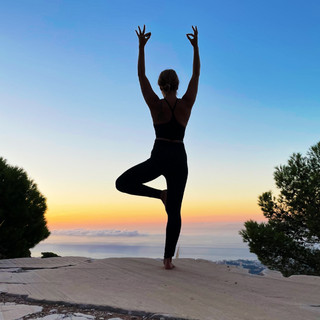
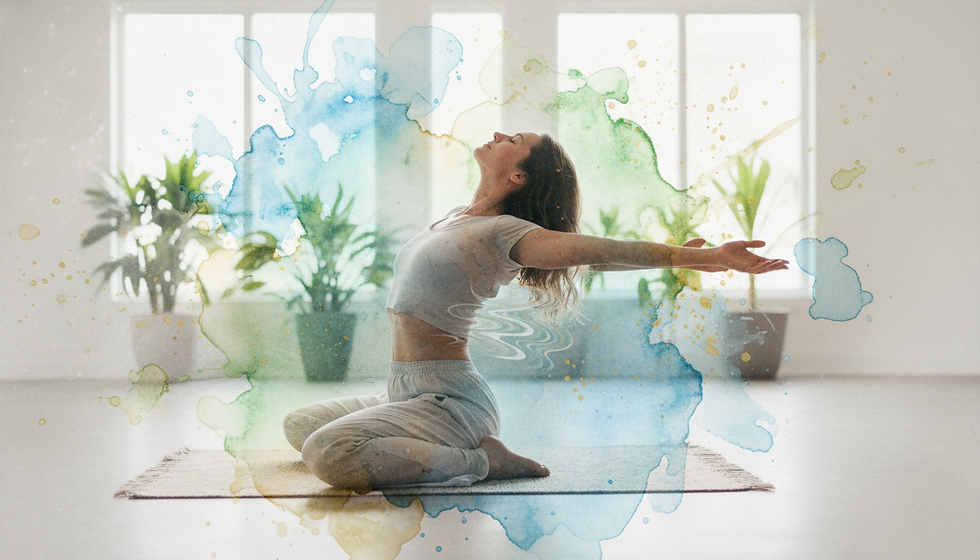
Have you ever started moving slowly, mindfully — maybe in yoga, breathwork, or somatic exercise — and suddenly felt tears rise for no obvious reason?
Nothing “happened.”
No memory appeared.
No story explained it.
And yet… something released.
This is not weakness.
It’s not imagination.
It’s not random.
It’s the body doing what it has always known how to do — release what it has been holding.
The Body Remembers What the Mind Learns to Forget
In The Body Keeps the Score, psychiatrist and trauma researcher Dr. Bessel van der Kolk explains that experiences — especially overwhelming or stressful ones — are not only stored as memories in the brain, but as sensations, tension patterns, and nervous system responses in the body.
When emotions cannot be safely felt at the time — grief, fear, anger, shock — the body adapts. Muscles tighten. Breath shortens. The nervous system shifts into survival.
This isn’t a failure.
It’s intelligence.
But what was once protection can later become pain, anxiety, numbness, or chronic tension.
Somatic exercise offers a way back — not through analysis, but through felt experience.
Why Somatic Exercise Works Where Talk Sometimes Can’t
Somatic practices work bottom-up, meaning they begin with sensation rather than thought.
Instead of asking “Why do I feel this way?”, we ask:
What do I notice in my body right now?
Where is there tension, heaviness, warmth, or movement?
What happens if I breathe with this instead of away from it?
This is important because trauma and suppressed emotion often live below conscious thought.
Dr. Gabor Maté speaks often about this, explaining that the body expresses what the mind has learned to suppress in order to survive. When emotions are not allowed expression, the body often carries them on our behalf — sometimes for years.
Somatic exercise gently invites those held responses to complete themselves.
Emotions Are Sensations Before They Are Stories
We tend to think of emotions as thoughts — but biologically, emotions begin as sensations in the body.
A tight chest.
A knot in the stomach.
A clenched jaw.
When we move slowly and mindfully, especially with breath, we begin to feel these sensations without immediately trying to fix or explain them.
And when the body feels safe enough — supported, unforced, unjudged — emotions may naturally surface.
This can look like:
Tears during gentle movement or rest
Shaking or trembling
Spontaneous sighing or deep breaths
Waves of sadness, relief, or calm
This is not catharsis for the sake of release. It’s completion.
Safety Is the Key to Emotional Release
Emotions don’t release because we push them out.They release because the nervous system finally senses safety.
Somatic exercise emphasises:
Slow, controlled movement
Choice and agency
Inner awareness rather than external performance
Rest and integration
Unlike high-intensity or purely goal-oriented exercise, somatic practices tell the body:You’re not being chased. You don’t need to brace. You can soften now.
And when the body softens, what has been held can gently move.
Why Yoga and Somatic Movement Are So Powerful Together
In trauma-informed yoga and somatic movement, the focus is not on stretching deeper or achieving shapes — it’s on staying present with sensation.
This is why emotions often surface in:
Hip openers
Slow spinal movements
Long exhalations
Stillness or Savasana
These practices access areas where the body commonly stores protective tension.
At Asana Tribe Yoga Spain, emotional release is never forced, analysed, or rushed. It is welcomed as a natural response — and equally welcomed if it doesn’t happen at all.
There is no expectation.
Only permission.
You Don’t Need to Relive the Past to Heal It
One of the most important things to understand is this:You do not need to remember or relive trauma for the body to heal.
Somatic exercise allows healing to happen through sensation, breath, and nervous system regulation — not storytelling.
Sometimes the body releases without explanation.And that is enough.
When the Body Leads, Healing Follows
Somatic exercise teaches us something deeply compassionate:Your body has never been against you.It has always been protecting you.
And when given the right conditions — safety, slowness, presence — it knows exactly how to let go.
Yoga then becomes more than movement.It becomes a conversation.
A remembering.
A homecoming.


Comments