
top of page
  • Facebook
  • Youtube
  • Google
  • Whatsapp
  • Airbnb
  • Instagram
Asana Tribe Yoga Spain Lotus Flower

ASANA TRIBE YOGA BLOG

Learn more about yoga, wellness, and healing

There are moments in running a small business that feel quietly overwhelming — and then there are moments that stop you in your tracks completely.


When my Facebook account was hacked and my business presence suddenly shut down, it felt like the ground disappeared beneath me.


Overnight, the platform I relied on to share class schedules, events, messages, and inspiration was gone. Years of posts, connections, conversations, and community-building — inaccessible. I couldn’t explain what had happened. I couldn’t reach many of you. And for a while, I didn’t know if I’d be able to rebuild at all.


I was devastated.


The Emotional Impact of Being Suddenly Disconnected


As a small business owner, especially in wellness, social media isn’t just marketing — it’s connection. It’s where we speak from the heart, share offerings, and stay visible in a fast-moving world.


When that was taken away without warning, I felt grief, panic, and a deep sense of loss. Not just for my business, but for the relationships I feared I’d lost touch with.


There were moments of self-doubt. Moments where I wondered if I’d done something wrong, or if all the energy I had poured into building Asana Tribe Yoga Spain had simply vanished.


It’s not often spoken about, but when your livelihood is tied to an online platform, losing access can feel deeply personal — even destabilising.


The Unexpected Gift of a Social Media Pause


And yet, something unexpected happened.


With no option to post, promote, or scroll, I was forced into a social media break I hadn’t planned — and honestly, probably wouldn’t have chosen.


At first, it felt unbearable. Then, slowly, it became revealing.


I noticed how much quieter my mind felt without constant notifications. I had more presence with my students in the room. More time to reflect on why I started teaching yoga in the first place — not for algorithms or reach, but for real human connection.


I returned to the essence of the work: holding space, teaching from lived experience, and being present with those who showed up.


The break reminded me that my business is not a platform — it’s people.


How the Yoga Tribe Community Held Me Up


What carried me through that period wasn’t visibility — it was community.


Students reached out through other channels. People shared word-of-mouth recommendations. Some of you checked in, booked classes, brought friends, and simply showed up.


That support meant more than you may realise.


When you choose to attend a class, share a post, recommend a teacher, or stay connected, you are actively sustaining a small business. You are helping a real person continue doing work they care deeply about.


Asana Tribe Yoga Spain exists because of the tribe — because of trust, loyalty, and shared values. This experience showed me just how powerful that support truly is.


What This Experience Taught Me as a Small Business Owner


Being hacked was painful. But it also brought clarity.


I learned:

  • Not to place all my trust in one platform

  • That rest from constant online presence can be nourishing

  • That community is stronger than algorithms

  • That my work has value beyond social media metrics


Most of all, I learned that resilience is not about doing everything alone — it’s about allowing yourself to be supported.


Why Your Support Truly Matters


When you follow, share, attend, or recommend a small business, you’re doing more than clicking a button.


You’re:

  • Supporting someone’s livelihood

  • Helping keep independent wellness spaces alive

  • Choosing connection over convenience

  • Investing in real, embodied experiences


In a world that often feels fast and impersonal, your support helps small businesses like mine continue offering spaces of care, presence, and healing.


Moving Forward with Gratitude


I wouldn’t wish the experience of being hacked on anyone. It shook me. It challenged me. It changed how I relate to my business and social media.


But it also deepened my gratitude — for this community, for the work I do, and for the reminder that what we build together offline matters just as much, if not more, than what we share online.


Thank you for being here.

Thank you for supporting small business.

Thank you for being part of this tribe.


With all my heart,

Lisa

Asana Tribe Yoga Spain 🤍
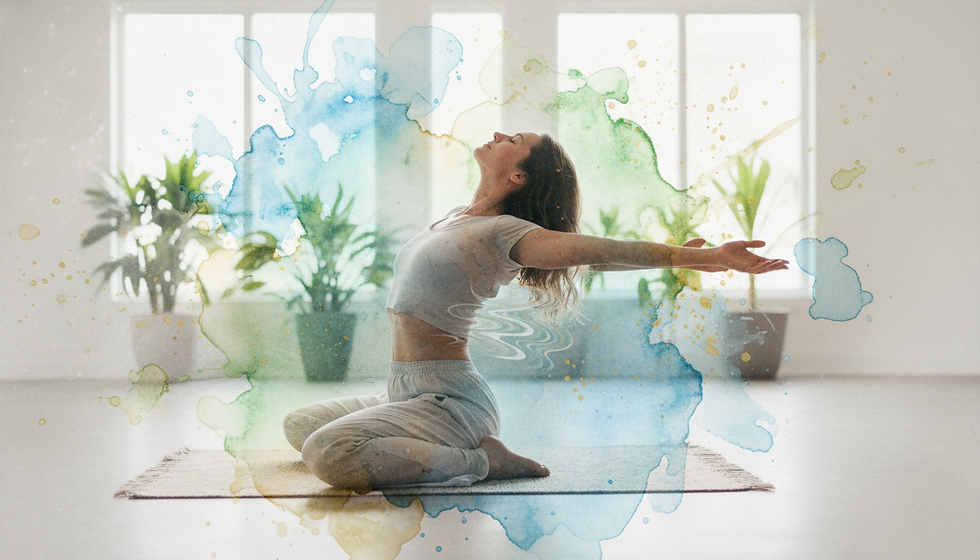


Have you ever started moving slowly, mindfully — maybe in yoga, breathwork, or somatic exercise — and suddenly felt tears rise for no obvious reason?

Nothing “happened.”

No memory appeared.

No story explained it.

And yet… something released.


This is not weakness.

It’s not imagination.

It’s not random.

It’s the body doing what it has always known how to do — release what it has been holding.


The Body Remembers What the Mind Learns to Forget


In The Body Keeps the Score, psychiatrist and trauma researcher Dr. Bessel van der Kolk explains that experiences — especially overwhelming or stressful ones — are not only stored as memories in the brain, but as sensations, tension patterns, and nervous system responses in the body.


When emotions cannot be safely felt at the time — grief, fear, anger, shock — the body adapts. Muscles tighten. Breath shortens. The nervous system shifts into survival.

This isn’t a failure.

It’s intelligence.


But what was once protection can later become pain, anxiety, numbness, or chronic tension.

Somatic exercise offers a way back — not through analysis, but through felt experience.


Why Somatic Exercise Works Where Talk Sometimes Can’t


Somatic practices work bottom-up, meaning they begin with sensation rather than thought.

Instead of asking “Why do I feel this way?”, we ask:

  • What do I notice in my body right now?

  • Where is there tension, heaviness, warmth, or movement?

  • What happens if I breathe with this instead of away from it?


This is important because trauma and suppressed emotion often live below conscious thought.


Dr. Gabor Maté speaks often about this, explaining that the body expresses what the mind has learned to suppress in order to survive. When emotions are not allowed expression, the body often carries them on our behalf — sometimes for years.


Somatic exercise gently invites those held responses to complete themselves.


Emotions Are Sensations Before They Are Stories


We tend to think of emotions as thoughts — but biologically, emotions begin as sensations in the body.

A tight chest.

A knot in the stomach.

A clenched jaw.


When we move slowly and mindfully, especially with breath, we begin to feel these sensations without immediately trying to fix or explain them.


And when the body feels safe enough — supported, unforced, unjudged — emotions may naturally surface.


This can look like:

  • Tears during gentle movement or rest

  • Shaking or trembling

  • Spontaneous sighing or deep breaths

  • Waves of sadness, relief, or calm


This is not catharsis for the sake of release. It’s completion.


Safety Is the Key to Emotional Release


Emotions don’t release because we push them out.They release because the nervous system finally senses safety.


Somatic exercise emphasises:

  • Slow, controlled movement

  • Choice and agency

  • Inner awareness rather than external performance

  • Rest and integration


Unlike high-intensity or purely goal-oriented exercise, somatic practices tell the body:You’re not being chased. You don’t need to brace. You can soften now.

And when the body softens, what has been held can gently move.


Why Yoga and Somatic Movement Are So Powerful Together


In trauma-informed yoga and somatic movement, the focus is not on stretching deeper or achieving shapes — it’s on staying present with sensation.


This is why emotions often surface in:

  • Hip openers

  • Slow spinal movements

  • Long exhalations

  • Stillness or Savasana


These practices access areas where the body commonly stores protective tension.

At Asana Tribe Yoga Spain, emotional release is never forced, analysed, or rushed. It is welcomed as a natural response — and equally welcomed if it doesn’t happen at all.

There is no expectation.

Only permission.


You Don’t Need to Relive the Past to Heal It


One of the most important things to understand is this:You do not need to remember or relive trauma for the body to heal.

Somatic exercise allows healing to happen through sensation, breath, and nervous system regulation — not storytelling.

Sometimes the body releases without explanation.And that is enough.


When the Body Leads, Healing Follows


Somatic exercise teaches us something deeply compassionate:Your body has never been against you.It has always been protecting you.

And when given the right conditions — safety, slowness, presence — it knows exactly how to let go.

Yoga then becomes more than movement.It becomes a conversation.

A remembering.

A homecoming.


Yoga is often associated with flexibility — long, open shapes and deep stretches. For hypermobile people, this can feel like a natural advantage. You might move easily into postures others struggle with, receive compliments on your flexibility, or feel at home in deep stretches.

But hypermobility requires a very different approach to yoga.


I’ve worked with many students who are hypermobile — and I’ve also lived parts of this experience myself. What looks like ease on the outside can hide instability on the inside.


Without proper muscular engagement, yoga can reinforce joint stress, chronic pain, and fatigue rather than support long-term wellbeing.


Hypermobility doesn’t mean something is “wrong” with your body. It means your joints move beyond the typical range — and that movement needs support, strength, and awareness.


Why Stretching Alone Isn’t Enough for Hypermobility


If you are hypermobile, your ligaments often provide less passive stability. This means your muscles need to work more, not less, to protect your joints.


Traditional yoga cues like “relax into the stretch” or “sink deeper” can actually increase joint strain. Instead, hypermobile bodies benefit from:

  • Active muscle engagement

  • Slower transitions

  • Smaller, more controlled ranges of motion

  • Resting in stability rather than depth


Yoga becomes less about how far you go, and more about how present and supported you feel.


Learning to Engage Muscles: The Foundation of Safe Practice


One of the most important skills for hypermobile yogis is learning how to engage muscles before moving into a posture.


This might feel unfamiliar at first — especially if you’re used to relying on flexibility. But muscular engagement creates a sense of containment, safety, and clarity in the body.


Helpful cues include:

  • Hugging muscles toward the bones

  • Activating around the joints before stretching

  • Gently drawing energy inward rather than collapsing outward

  • Moving with the breath instead of hanging in end ranges


For example, in forward folds, bend the knees slightly and engage the legs rather than dropping weight into the joints. In backbends, focus on strengthening the back body and core instead of pushing into the spine.

This approach builds functional strength, not tension.


Stability Is Not Restriction — It’s Freedom


Many hypermobile people fear that stability will feel limiting. In reality, stability creates freedom.


When the body feels supported:

  • The nervous system relaxes

  • Movement becomes more fluid

  • Pain and fatigue often reduce

  • Confidence in the body increases


Somatic yoga practices are especially supportive here. They encourage subtle engagement, slow exploration, and deep listening rather than forcing shapes.


At Asana Tribe Yoga Spain, I often invite students to work at 60–70% of their available range. This allows muscles to stay awake and responsive, rather than switching off at the extremes.

Common Yoga Poses to Approach with Care

Hypermobility doesn’t mean avoiding poses — it means modifying how you enter and hold them.

Be mindful with:

  • Deep hip openers (like pigeon)

  • Passive backbends

  • Long-held yin poses

  • Locking out elbows and knees


Using props, reducing depth, and engaging surrounding muscles can make these poses supportive rather than destabilising.


Restorative yoga can also be beneficial — as long as joints are supported and not left hanging in extreme ranges.


Listening to Fatigue and Nervous System Signals


Hypermobility often comes with increased nervous system sensitivity. You may feel exhausted after what looks like a “gentle” class or notice delayed soreness.


This is your body asking for:

  • More rest

  • Less intensity

  • Better pacing


Yoga should leave you feeling grounded and integrated, not drained. Building awareness of subtle signals is just as important as physical strength.


A New Relationship with Yoga


For hypermobile people, yoga becomes a practice of embodiment rather than expression. It’s not about showcasing flexibility — it’s about developing inner support, self-trust, and sustainable movement patterns.


When you learn to engage muscles and honour your body’s needs, yoga transforms from something that wears you down into something that truly supports you.


Your body doesn’t need to be pushed.It needs to be listened to.

And when you meet it with patience and care, it will meet you with resilience.


bottom of page