


Enhance Your Balance with Effective Yoga Techniques for Strength and Stability
- Lisa Zeffertt
- Jan 13
- 3 min read
Balance is about so much more than standing on one leg.It’s about trust, awareness, strength, and the quiet confidence that comes from feeling steady in your own body.
At Asana Tribe Yoga, we see balance as a conversation between body, mind, and nervous system — especially for women in midlife, those recovering from injury, or anyone feeling a little ungrounded in today’s fast-moving world.
The beautiful thing? Balance can be trained at any age and any stage of your yoga journey.
Let’s explore why balance matters, and share practical, accessible exercises you can start using today.
Why Balance Is So Important (On and Off the Mat)
Good balance helps to:
Prevent falls and injuries
Strengthen stabilising muscles in the feet, ankles, hips, and core
Improve posture and joint health
Build body awareness and coordination
Support emotional steadiness and mental focus
As we age, after injury, or during hormonal changes such as menopause, balance can feel more challenging — not because we’re failing, but because the body is asking for more mindful support.
The Hidden Secret to Better Balance
Balance isn’t just about muscle strength.It relies on three key systems working together:
Proprioception – your body’s ability to sense where it is in space
Core and hip stability – deep muscles that hold you upright
Nervous system regulation – staying calm instead of tensing or panicking
When we slow down, breathe, and move with awareness, balance naturally improves.
Practical Yoga Exercises to Improve Balance
These gentle yet effective exercises can be practised at home or integrated into your yoga routine.
1. Foot Awakening & Grounding (2–3 minutes)
Balance starts at the feet.
Try this:
Stand barefoot
Slowly shift your weight forward, back, and side to side
Spread your toes wide and press evenly into all four corners of each foot
Imagine roots growing down into the earth
✨ This improves foot strength and proprioception — essential for stability.

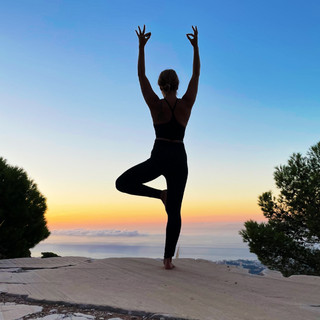
2. Tree Pose (Vrksasana) – With Support
Tree Pose is a classic balance posture, but it doesn’t need to be rigid.
How to practise:
Stand near a wall or chair
Place one foot against the ankle or calf (avoid the knee)
Keep a soft bend in the standing leg
Hands can rest at the heart or lightly touch the wall
🧘♀️ Tip: Fixing your gaze on one calm point (drishti) helps the mind settle.

3. Heel-to-Toe Walking (Mindful Balance Drill)
This simple exercise is powerful for coordination.
How to practise:
Walk slowly in a straight line
Place the heel of one foot directly in front of the toes of the other
Move with awareness, using your breath to stay relaxed
✨ Excellent for improving balance after injury or during recovery.

4. Single-Leg Stand with Breath Awareness
Sometimes stillness is the most challenging practice.
Try this:
Stand on one leg
Keep your breath slow and steady
Notice any wobbling without judgment
Gently engage your core and relax your jaw
💛 This teaches patience, self-trust, and nervous system regulation.

5. Chair Pose Variation (Utkatasana)
Strength supports balance.
How to practise:
Bend your knees slightly as if sitting back into a chair
Keep weight in the heels
Engage the core and lengthen the spine
Option to lift one heel or alternate legs
🔥 Builds leg strength and stability while staying accessible.
Balance Is Also Emotional
When life feels uncertain, the body often reflects that instability.Yoga teaches us how to stay present during wobble — without gripping, forcing, or judging ourselves.
Every time you lose balance and return, you’re practising resilience.
A Gentle Reminder
Balance doesn’t come from pushing harder.It comes from listening, slowing down, and building trust with your body.
At Asana Tribe Yoga Spain, our classes are designed to support:
Injury recovery
Menopause and hormonal changes
Nervous system regulation
Confidence and self-connection
You don’t need to be “good at balance” to practise balance — that’s the practice itself.
Want to Practise Balance in a Supportive Space?
Join us for small-group yoga, beach yoga, and mindful movement in Mijas Pueblo, where balance is explored gently, safely, and with compassion.
🌿 Your body already knows how to find stability — yoga simply helps you remember.
Comments