

The Importance of Balance as We Get Older: More Than Just Standing on One Leg
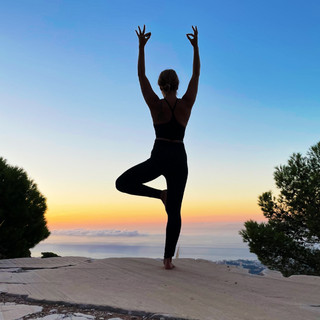

As we get older, balance becomes one of the most important—and often overlooked—aspects of our wellbeing. Many people associate balance with physical stability alone: not falling, not wobbling, being able to stand on one leg. But true balance goes far deeper than that.
At Asana Tribe Yoga Spain, balance is understood as a conversation between body, mind, and nervous system. It’s not about perfection or performance—it’s about learning to feel safe, centred, and supported within yourself as your body changes over time.
Why Balance Changes With Age
As we age, several natural changes occur in the body that can affect balance:
Reduced muscle strength, especially in the legs and core
Changes in joint mobility and proprioception (the body’s sense of where it is in space)
Slower reaction times
Changes in vision and inner ear function
Increased fear of falling, often linked to previous injury or trauma
Hormonal shifts—particularly during perimenopause and menopause—can also impact coordination, joint stability, and nervous system regulation. Many women notice they feel less “steady” not just physically, but emotionally too.
This is where yoga, when taught mindfully, becomes a powerful tool.
Balance Is a Nervous System Skill
One of the most important things to understand is that balance is not just muscular—it is neurological.
When the nervous system feels stressed, overwhelmed, or unsafe, balance becomes harder. The body prioritises survival, not refinement. This is why balance poses feel almost impossible on days when you’re tired, anxious, or emotionally overloaded.
Gentle, somatic-based yoga helps regulate the nervous system, allowing the body to shift out of fight-or-flight and into a state where balance can naturally improve.
At Asana Tribe Yoga, balance is approached slowly and compassionately—often starting on the ground—so students can rebuild trust in their bodies without pressure.
Balance as Injury Prevention
One of the biggest benefits of balance training as we age is injury prevention.
Improved balance helps:
Reduce the risk of falls
Protect joints such as knees, hips, and ankles
Improve posture and gait
Build confidence in everyday movements
Rather than pushing into advanced poses, functional balance work—combined with breath awareness—supports long-term joint health and resilience.
This is especially important for those recovering from injury or surgery, where fear of re-injury can linger in the body long after physical healing has occurred.
Emotional and Energetic Balance
Balance isn’t just something you practise on the mat—it’s something you feel in your life.
As we get older, we often carry more responsibility, more emotional history, and sometimes more grief. Yoga offers a space to rebalance internally: between effort and rest, strength and softness, doing and being.
Many students share that balance poses bring unexpected emotions to the surface. This is normal. When we wobble, we meet our patterns—how we respond to instability, loss of control, or change.
Learning to breathe through that wobble is a profound life skill.
Yoga for Balance at Any Age
You are never “too old” to work on balance. In fact, it becomes more valuable with time.
A supportive yoga practice for balance should include:
Slow transitions
Use of props and wall support
Focus on foot strength and hip stability
Breath-led movement
Options to rest whenever needed
At Asana Tribe Yoga Spain, classes are designed to meet you exactly where you are—whether you’re navigating menopause, recovering from injury, or simply wanting to feel more grounded and confident in your body.
Balance Is About Trust
Ultimately, balance is about trust—trusting your body, your breath, and your ability to adapt.
You don’t have to be perfectly still to be balanced. You just have to be present.
And that’s something we can continue to cultivate at any stage of life.


Comments